
On 6 February 2026 A historical event took place as Bangladesh entered a new era of economic engagement by signing an Economic Partnership Agreement (EPA) with Japan in Tokyo. This marks a unique milestone for Bangladesh, as it is the country’s first full-fledged EPA with a developed nation, while also representing Japan’s first such agreement with a least developed country. The pact opens a new chapter in bilateral trade and investment relations, with Japan granting 100 percent duty-free access to 7,379 Bangladeshi products. The agreement is expected to significantly expand Bangladesh’s access to the Japanese market and support export diversification as the country prepares to graduate from LDC status in November this year. Attracting increased Japanese investment—Bangladesh’s primary objective—remains a key focus of the EPA, alongside retaining preferential trade benefits in the post-LDC period. Encompassing trade in goods and services, investment, and technology cooperation, the agreement is set to deepen economic ties and may also create opportunities for the deployment of skilled Bangladeshi workers, including trained nurses, in Japan.
Beyond its economic significance, the agreement offers broader opportunities for institutional, social, and technological advancement. Japan’s governance practices, administrative discipline, transportation systems, education, culture, and work ethic can serve as valuable sources of inspiration for Bangladesh. Exposure to Japan’s advanced administrative framework may help improve policymaking, administrative efficiency, and development planning, while insights from its high-quality infrastructure and transportation systems can inform Bangladesh’s own infrastructure development. Lessons drawn from Japanese education, culture, and civility can contribute to positive changes in societal values and work culture. Moreover, Japan’s technological excellence and innovative practices can support Bangladesh’s progress in modern production methods and applied technologies. As a result, this agreement holds the potential to strengthen Bangladesh not only economically, but also socially, administratively, and technologically.
Japan shines as a distinctive example in the history of world civilization, distinguished by its remarkable journey from feudal isolation to the forefront of modern development. The transformation of Japan from a closed, traditional society into a global economic and technological power is nothing short of extraordinary—surpassing even the realm of legend. For nearly three centuries during the Samurai era, Japan remained largely isolated from the outside world. Yet, through the Meiji Restoration, the nation reinvented itself and emerged with renewed strength and purpose, marking one of the rarest and most inspiring chapters in world history.
During that period, only one or two foreign ships were permitted to enter Japanese ports each year. The arrival of American naval commander Matthew Perry, along with the demonstration of modern firearms and naval power, proved to be a turning point. This encounter exposed the limitations of Japan’s traditional military capabilities and compelled its leadership to recognize the urgency of modernization. As a result, Japan embarked on a transformative path that laid the foundation for its emergence as a modern nation. Drawing initially on European technological models, Japan eventually developed its own technological excellence.
In 1868, the Meiji Restoration ushered in sweeping reforms, including the relocation of the capital from Kyoto to Tokyo—an event that symbolized the birth of modern Japan as a nation-state. These reforms unified the country under a centralized system of governance. Despite its scarcity of natural resources—relying mainly on water and marine fisheries—Japan overcame structural limitations through discipline, innovation, and strategic planning, opening new horizons of development.
Japan’s engagement with Europe facilitated its integration into the global community. To acquire knowledge and expertise, large numbers of Japanese students were sent abroad, particularly to Europe and the South American countries. The legacy of this outward-looking approach remains evident today, including the visible presence of Japanese communities in parts of South America.
Globally, Japanese civilization is admired for its discipline, humanistic values, and moral integrity. Its foundations rest upon mutual respect, punctuality, and a strong sense of duty. The cultural emphasis on respecting elders, honoring commitments, and prioritizing collective welfare over individual interest has contributed to a highly organized and stable society.
The Japanese are not only technologically advanced but also far ahead in terms of mental strength and overall social development. From an early age, children are systematically nurtured to build resilience, independence, self-discipline, and inner strength. They are encouraged to work independently, take responsibility for their duties, and make decisions with confidence. Simple yet purposeful practices—such as cleaning classrooms, completing tasks independently, and managing daily responsibilities—help instill self-reliance and accountability. Alongside this, values like patience, tolerance, and collective responsibility are emphasized, reinforcing mental fortitude and social cohesion.
Cleanliness and environmental consciousness are integral to the Japanese way of life. From schools to public spaces, cleanliness is regarded not merely as a habit but as a moral obligation. The consistent practice of honesty and justice has fostered deep mutual trust within society, strengthening the civilizational framework. At the same time, Japan’s education system places strong emphasis on ethics, discipline, civic responsibility, and human values.
In particular, Japan’s experience in local government systems, technology transfer, human development, transportation networks, equitable income distribution, infrastructure development, and corruption-free administration offers valuable lessons for Bangladesh. If administrative reforms, infrastructure planning, industrial and trade policies, and investment strategies are designed along the lines of the Japanese model, economic growth could accelerate significantly, while employment generation would become more sustainable.
Japan’s administrative structure is primarily based on prefectures, or province-level units. Each prefecture functions as a high-level administrative entity responsible for managing local government, carrying out administrative tasks, and formulating policies. Prefecture is led by an elected Governor and an elected Prefectural Assembly. These institutions are tasked with formulating and implementing policies to ensure the welfare of local inhabitants, economic development, education, environmental protection, and public safety.
The prefectural system in Japan helps coordinate local administration with the central government, ensuring transparency, efficiency, and accountability. It not only guarantees the transparency of administrative operations but also plays a crucial role in promoting local participation, delivering public services, and enhancing the quality of development initiatives. In this way, the prefectural system has provided Japan with a well-organized and stable administrative framework.
Bangladesh can also make its local administration more effective and well-organized by transforming its district structure into prefecture-style units. As a result, urban and rural development, local public services, economic activities, and the overall quality of citizens’ lives would gain a new dimension.
In Dhaka, the absence of adequate housing for low-income groups remains a major challenge. In contrast, Japan has ensured housing for millions of low-income citizens, with rental costs often limited to around 10 percent of monthly income. Its wage structure enables families not only to meet daily expenses but also to save. Moreover, Japan has ensured universal access to quality healthcare. While Bangladesh struggles with volatile commodity prices and market syndicates that artificially inflate costs in contrast, Japan offers a rare example of stable food prices and effective market regulation.
Bangladesh’s city corporation system could be significantly strengthened by adopting the model of the Tokyo Metropolitan Government. Transforming Dhaka into a well-planned, livable, and efficient metropolis requires the establishment of a Tokyo-style metropolitan authority. A single, accountable body could effectively coordinate urban planning, transportation networks, environmental management, public services, and development projects—laying the foundation for substantial improvements in housing, mobility, environmental quality, and the overall standard of urban life.
Although Japan is one of the world’s largest automobile-producing countries, the majority of its population relies on public transportation for daily commute. The country has developed an extensive and highly efficient network of trains, subways, and buses that are known for punctuality, safety, and reliability. Urban planning in major cities is centered on mass transit systems, ensuring easy access to offices, residential areas, and commercial hubs. Moreover, the high cost of car ownership and limited parking facilities discourage private vehicle use, while public transportation is widely accepted as a practical and environmentally sustainable alternative.
Japan also stands as a model in governance and administration, trade and industry, technology, human and social development, and education. Inspired by Japan’s experience, countries such as China, South Korea, Thailand, Malaysia, Indonesia, and Vietnam have achieved remarkable progress. Bangladesh, too, can pursue comprehensive development by learning from the Japanese example.
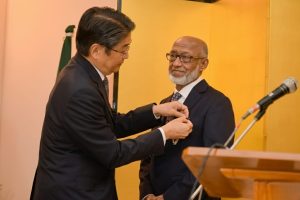
The writer of this article has over four decades of experience in fostering relations between Bangladesh and Japan, having worked closely with Japan, accompanied nearly all Bangladeshi heads of government on official visits, and played a key role in attracting investment. Although the original objective was economic, increased proximity has shifted the perspective toward a more human-centered form of soft power. In recognition, the Government of Japan awarded him the Order of the Rising Sun, symbolizing friendship and cooperation between the two nations. From this perspective, it is clear that following Japan’s path offers Bangladesh the safest and most prudent course toward national advancement. Japan’s development model—built on discipline, long-term planning, technology, and human resource development—provides valuable lessons. For Bangladesh, adopting these principles in industrialization, education, infrastructure, and governance is essential. The Bangladesh-Japan relationship extends beyond economics to cultural and strategic dimensions, making Japan’s example a practical and sustainable guide for Bangladesh’s future development.
Japan and Bangladesh share significant similarities in many areas, and Bangladesh has much to learn from Japan’s development experience and long-term vision. Japan’s success is deeply rooted in a unified linguistic identity, a highly skilled workforce, and a meticulously planned and efficiently administered system of governance—factors that have significantly accelerated its development trajectory. Although successive Bangladeshi governments have maintained cordial and respectful relations with Japan, considerable potential remains to attract a much larger volume of Japanese investment. By cultivating a business-friendly environment inspired by Japan’s principles of transparency, efficiency, and long-term planning, Bangladesh could position itself as a preferred destination for global investors, thereby catalyzing sustained economic growth and large-scale employment generation.”
The harmonious blend of ancient tradition and modernity has given Japanese civilization its distinct stature. On the occasion of the Emperor’s birthday, we pay homage to His Majesty, a symbol of wisdom, dignity, and steadfast leadership, and extend our heartfelt wishes for his good health and long life. We also express our hope that under his revered guidance, Japan’s journey of peace, progress, and prosperity will continue uninterrupted for generations to come.
Author is a Former President, Japan Bangladesh Chamber of Commerce and Industry (JBCCI),Recipient of the Order of the Rising Sun, Conferred by His Majesty, The Emperor of Japan,E-mail: haqsbay2@gmail.com


