
In a pioneering move for Bangladesh, Chattogram Deputy Commissioner (DC) Mohammad Zahidul Islam Mian has launched a dedicated online public hearing platform for expatriates. This first-of-its-kind initiative aims to provide a direct line of justice for overseas Bangladeshis, addressing the systemic grievances they face while supporting the national economy from abroad.
The inaugural session, presided over by DC Zahidul Islam at his office on Wednesday (April 29), saw participation from senior district and police officials, while all Upazila Nirbahi Officers (UNOs) joined virtually to ensure grassroots coordination.
During the hearing, 11 expatriates from different countries raised complaints involving land disputes, embezzlement, family conflicts, extortion, and harassment through false cases. The deputy commissioner instructed the concerned officials to take immediate action, directing police to investigate matters requiring inquiry.
“Expatriates work tirelessly away from their families and send remittances that cover more than half of the country’s import expenses,” Zahidul Islam said. “This initiative is meant to honour their sacrifices and ensure prompt solutions to their problems.”
He noted that Bangladesh’s economy largely depends on three pillars—garments, remittances, and agriculture—and highlighted the critical role played by nearly 15 million Bangladeshis living in about 165 countries.
One participant, Rana Sushil from Rangunia, currently residing in Qatar, appealed for the recovery of embezzled funds. The DC immediately asked local administration and police to investigate and take necessary action.
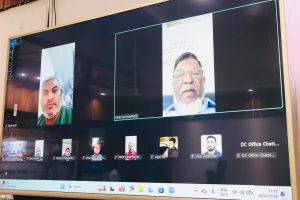
Photo: DCV
Zahidul Islam said many expatriates suffer from mental distress due to unresolved family and property-related issues back home. “Our goal is not only to hear complaints but to ensure swift resolution,” he added.
According to the administration, written complaints were collected in advance and applicants were contacted through relevant ministries and embassies to facilitate the process.
“Technology now allows us to stay connected with expatriates despite geographical distance. We want them to feel that they are not far from us,” the DC said.
To ensure continued engagement, a one-hour slot has been allocated for expatriates in the weekly public hearing held every Wednesday, with plans to extend the duration if necessary.
Officials said most complaints involved land grabbing, financial fraud, and legal harassment. Several expatriates alleged that their properties were illegally occupied in their absence.
Among them, Oman-based Nur Mohammad complained of land grabbing and financial misappropriation, while Qatar-based Mohammad Anwar alleged attempts to evict him from his property and threats to his life. Others from Saudi Arabia, Dubai, and Abu Dhabi reported similar issues.
Reiterating the administration’s commitment, Zahidul Islam said, “Expatriates are a driving force of our economy. We are working with utmost importance to protect their rights and properties.”
Officials added that many humanitarian cases raised during weekly hearings are resolved on the spot, with emergency financial assistance provided where necessary. Other issues are referred to relevant authorities, and applicants are kept informed about progress.
The initiative has already led to increased public participation in the district’s regular public hearings, officials said.


